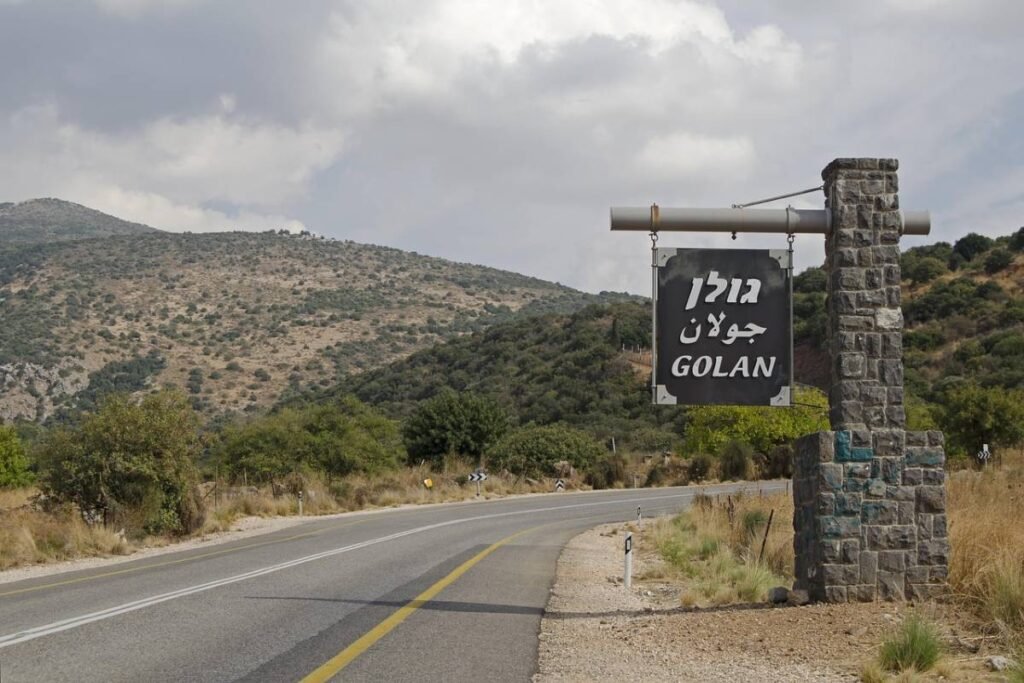
Since the June 1967 War, there have been a series of Syrian-Israeli negotiation efforts that have, to this day, not resulted in a comprehensive peace deal. Since the Israeli occupation of the Syrian Golan Heights in 1967, the return of the Golan has been a central condition in Syria’s approach to peace. Subsequently, direct and indirect negotiations between the two sides occurred, beginning with the ceasefire agreement of 1974, and continuing with the 1991 Madrid Conference, the Washington talks in the 1990s, Shepherdstown in 2000 and the Turkish Mediations in 2008. The following report showcases key moments along the Syrian-Israeli negotiations path, as well as their contexts and results. It also analyzes the reasons for these talks’ continued failure and attends to the uniqueness of the Syrian path in comparison to the Egyptian and Jordanian paths to peace.
After the 1967 War: the Militarized Silence and the Absence of Negotiations
The defeat of June 1967 was a critical juncture in the Arab-Israeli struggle; this was due to Israel’s capture of the Golan Heights, the West Bank, the Gaza Strip and parts of the Sinai Peninsula. In the aftermath of the war, the Fourth Arab Summit—which included Syria—took an official position referred to as “Khartoum’s Three No’s,”: no reconciliation, no recognition, and no negotiations with Israel. On this basis, Damascus refused to enter any direct negotiations with Israel. Meanwhile, the Golan became central to political discourses in Syria. Hafez al-Assad’s Ba`ath Party further enshrined the Golan as a non-negotiable condition. But the cause of the Golan not only related to the question of national sovereignty, but also to material resources like water and to strategic land passages to Lake Tiberius. More generally, the Golan had become a political symbol signifying occupied land.
At the time, Syria’s refusal occurred alongside the issuance of Security Council Resolution Number 242 in November 1967, which called for the withdrawal of Israeli forces from the lands Syria had lost in the 1967 War. In exchange, the countries of the region would recognize the right to live in peace within securitized borders. Given its anticolonial orientation, the Syrian state rejected the UN resolution, citing that it did not demand the full withdrawal of Israeli forces from all occupied territories and that it put the victim and the aggressor on an equal footing. Israel accepted the resolution but loosely interpreted the notion of “withdrawal,” freeing itself from the demand to return to the pre-1967 borders, especially in Jerusalem and the Golan. This led to the resolution’s lack of implementation.
Beyond isolated confrontations on the Golan border, there was a near total freeze on Syrian-Israeli political developments between 1967 and 1973. During this period, Special Representative to the UN General Secretary Gunner Jarring (1967-1971) was tasked with bringing together perspectives that reinforced Resolution 242. This failed given Israel’s insistence on negotiating without committing to a full withdrawal from the occupied territories and Syria’s insistence on refusing negotiations that do not include returning the Golan.
This context of stalemate could be described as a “militarized silence” in which diplomacy was replaced by militarization on both sides. Damascus rebuilt its military forces which culminated in Syria’s participation the October 1973 War against Israel. While Syria achieved some progress in the Golan, the end of the war brought no final victory.
The Agreement to End Hostilities 1974: A Military Ordering with an International Sponsor
The Security Council Resolution Number 338 served ended the October 1973 War and renewed negotiations based upon Resolution 242. After the war, international diplomats intervened to prevent the resumption of violence. The US Secretary of State Henry Kissinger, for instance, pursued several “diplomatic missions” between Damascus and Tel Aviv, culminating in both sides signing the Syrian-Israeli Disengagement Agreement in Geneva on May 31, 1974 which called for a ceasefire based on Resolution 338. Based on the agreement, Israel withdrew from some areas it had occupied in 1973–the most important being the city of Quneitra—in exchange for a demilitarized buffer zone administered by the United Nations Disengagement Observer Force (UNDOF). The agreement thus returned some land to Syria and restored calm on the Golan border, all without addressing the essential causes of the struggle: namely, the final status of the Golan Heights and a comprehensive peace settlement.
From the Syrian perspective, the Agreement enshrined the results of the war, including the calming of the border, the re-ordering of domestic affairs, and the bolstering of Hafez al Assad’s regional position. The war was also used to justify applying the Emergency Law and censoring the opposition. From the Israeli side, the war enabled Israel to secure its northern borders and to focus on its negotiations with Egypt.
In 1981, however, Israel unilaterally imposed its jurisdiction on the Golan Heights in an act that was not internationally recognized. Despite this, commitment to the Disengagement Agreement continued and the demand for the full return of the Golan Heights remained.
The Madrid Moment and After (1991-1996): the Path toward Bilateral Negotiations
In 1991, the end of the Cold War and the beginning of the Gulf War created a new international context in which the United States pushed for a comprehensive peace plan for the Middle East. The Syrian President agreed to this plan, culminating in the Madrid Conference for Peace in October 1991, which was co-sponsored by the United States and the (then) Soviet Union. This occurred after intense American pressures considering Syria’s reluctance to enter direct negotiations with Israel.
The Madrid Conference served as a preliminary framework for negotiations. It was founded upon the principal of “land for peace” and referenced Security Council Resolutions 242 and 338. After Madrid, separate bilateral negotiation tracks were initiated between Israel and Syria, Lebanon, Jordan, and the Palestinians. This approach allowed Israel a superior position in negotiations, while weakening the formation of a unified Arab position. Despite Syria’s hesitation on the fragmentation of negotiations, it accepted them considering the transformations in the international system and American hegemony.
At the end of 1991, direct Syrian-Israeli negotiations thus began in Washington. They focused on essential components of the struggle like Israeli withdrawal from the Golan Heights and the return to the June 4, 1967 borders; the initiation of de-militarized zones; the nature of peace relations between the two sides; and the issue of resources like water and borders. These negotiations witnessed an important breakthrough in the mid-1990s.
By way of American mediation channels, Israeli Prime Minister Yitzhak Rabin agreed to the total Israeli withdrawal from the Golan Heights. This, in exchange that Syria meet Israeli security demands and gradually normalize political relations. This unwritten commitment came to be known as “Rabin’s Entrustment” and it became a basis for the most serious Syrian-Israeli negotiations in 1995 and 1996. In their testimony, the Syrian negotiation team—which included Ambassador Walid al-Mu`alem—referenced the ground-breaking nature of this rounds of negotiations. With American mediation, Israel and Syria further agreed upon an ambitious timeline for negotiations: to reach an agreement by June 1996 and to produce a final peace treaty in September of the same year.
The assassination of Yitzhak Rabin in November 1995, however, disturbed the path to peace. As Shimon Peres ascended to the Israeli premiership, he demanded early elections and suspended the Syrian-Israeli political process. This further coincided with an escalation of bombing operations. After Benjamin Netanyahu’s win in the 1996 elections, the Syrian-Israeli process entered a near-total freeze due to the Israeli government’s refusal to fully withdraw from the Golan Heights. There was also little negotiating pressure on Damascus. As such, the first phase of Syrian-Israeli negotiations ended without an agreement, despite those negotiations approximating an unwritten and mutual understanding. This political moment figured as a lost opportunity whose failures pertained to changes in political leadership in Israel, as well as conditions of securitarian tensions in Israel and the region.
2000 Shepherdstown Summit: The Final Attempt in the Age of Assad
In 1999, the Israeli Labor Party regained power and revived hopes for the resumption of Syrian-Israeli negotiations. According to Itamar Rabinovich’s book The Brink of Peace, the new Israeli Prime Minister Ehud Barak sought to seize the “last opportunity” before the political balance in Israel changed.
Meanwhile, the health of the Syrian President was deteriorating which generated a need among several factions, including the US administration, for resolving the peace process before Assad’s death. In December of 1999, the US sponsored a preliminary meeting in Washington that brought together the Syrian Foreign Minister Farouk al-Shari` and Prime Minister Barack. Also present was President Bill Clinton. In his book, The Missing Peace, Dennis Ross—the US envoy to the Middle East peace process during the administrations of George H.W. Bush and Bill Clinton—describes this meeting as a first step rather than a targeted attempt at negotiation.
This meeting was followed by an intensive period of negotiations at the Shepherdstown resort in West Virginia in early 2000, which sought to arrive at a comprehensive Syrian-Israeli peace agreement. According to Rabinovich, negotiations were organized according to four committees that specialized in security, borders, water, and peace relations. Led by al-Shari`, the Syrian delegation demonstrated flexibility and accepted demands for buffer zones, international monitoring mechanisms, and security guarantees for Israel.
Nonetheless, the status of border-drawing became the final obstacle to negotiations. The central dispute related to the location of the June 4, 1967 line which Syria insisted should touch Lake Tiberius, given that it is critical to Syrian sovereignty and water rights. In response, Barack proposed that Israeli forces withdraw to the 1923 international border which would leave a narrow strip of Lake Tiberius’ shoreline within Israeli control. Given its insistence on total withdrawal, Damascus considered this an unacceptable compromise.
Turkish Mediation 2007-2008: Indirect Talks
With Bashar al-Assad’s ascension to power in 2000, Syrian-Israeli negotiations were in suspension. This was compounded by the turbulent regional context, which included the Second Palestinian Intifada, the US invasion of Iraq, and the growing influence of Iran and Hezbollah. The 2005 assassination of Lebanese Prime Minister Rafik al-Hariri further affected Syria’s position. The assassination reduced the chances for the resumption of negotiations and reinforced the deadlock in the region.
Given its new relations with Damascus and Tel Aviv, Turkey appeared as a mediator. Under Turkish supervision, indirect negotiations between Syrian and Israeli representatives took place in 2007 and 2008. According to American and Turkish accounts, Damascus demonstrated a willingness to discuss comprehensive security arrangements in the Golan— demilitarized zones, early warning mechanisms, and limited cooperation on security issues—in exchange for the withdrawal of Israeli forces to the June 4, 1967 lines. In his book Seeking Summits, Frederic Hof— the American diplomat responsible for resuscitating negotiations—explains that the new Syrian leadership showed even more flexibility than under Hafez al-Assad so long as the land was returned.
Several researchers view that Bashar al-Assad’s goal in these negotiations was, not a final settlement with Israel, but to end Syria’s international isolation vis-à-vis the West. On the other side, Ehud Olmert’s government hoped to demarcate Israel’s northern front and to gradually distance Syria from Iran. Despite progress, this mediation attempt collapsed in December of 2008 following Israel’s military operation “Cast Lead” in Gaza. This and the end of Olmert’s political term deprived the peace process of futurity.
After 2011: the End of the Path to Negotiations
The outbreak of the 2011 Syrian Revolution and its transformation into armed conflict definitively ended the course of Syrian-Israeli negotiations. Shortly before, American President Barack Obama attempted to resuscitate negotiations, appointing Senator George Mitchell as special envoy for peace and assigning his assistant Frederic Hof to negotiate with Damascus. In 2010, Hof drafted an agreement which upgraded the “Rabin Entrustment”; it made total Israeli withdrawal from the Golan Heights contingent on a change in Syrian foreign policy. Specifically, the draft sought to sever Syria’s relation with Iran; to end support for Hezbollah and Hamas and to expel their leaders; and to refrain from aggression and consider peace as part of a greater Arab settlement.
Initially, Bashar al-Assad expressed his openness to this proposal. John Kerry conveyed Assad’s willingness to a deal that would fulfill Israeli security demands in exchange for Israeli withdrawal to the June 4th lines. Damascus also hinted that it could restrain Hezbollah in the event of signed peace.
In late February of 2011, Hof delivered to Assad the final draft of the agreement; however, the outbreak of protests in March stalled US diplomatic efforts. That April, Mitchell resigned and the Americans shifted to demanding Assad’s departure. Given Syria’s descent into civil war, the possibility of negotiations disappeared. In 2019, the US recognition of Israeli sovereignty over the Golan Heights further exacerbated an increasingly sensitive regional context.
Reasons for the Failures of the Negotiations and the Specificities of the Syrian Path
For more than half a century, several factors have obstructed the Syrian-Israeli negotiation process, the most important of which is the Golan Heights—a high security region as well as a source of water for both sides. For Syria, controlling the Golan related to issues of national sovereignty, security, and dignity. For Israel, the Golan figured as a crucial defensive buffer and a source of material resources. This has led to the consolidation of Israeli settlements in the area.
An additional obstacle was divergences over the “land for peace” principle. While Damascus focused on ensuring a complete Israeli withdrawal, Israel prioritized bilateral security arrangements and gradual normalization. This led to a persistent gap in trust and prevented the formulation of a balanced solution.
External fluctuations further inhibited the negotiation process. Depending on the change of administrations and regional priorities, American influence represented a driving force toward negotiation at some stages and a retarding factor in others. At some points, US leadership linked the Syrian process to broader regional interest which complicated the process.
Tracing the course of Syrian-Israeli negotiations—from the aftermath of the 1967 war until the outbreak of the 2011 events—reveals how the process has been shaped by a complex balancing act that took account of territory and security, political factors, and the unpredictable regional landscape. Throughout, a recurring pattern emerged: initial caution toward a settlement followed by setbacks at the decisive moment. This was mostly due to disagreements over Israeli withdrawal from the Golan Heights; domestic calculations on both sides; and shifting geopolitical dynamics. With the fall of the Syrian regime in December of 2024, the traditional model for negotiations have ended; this without resolving the questions accumulated over decades of negotiations. Recent transformations have reintroduced the issue of the Golan Heights and other issues that are intertwined with the stakes of Syria’s reconstruction, political positioning, and the pressures exerted by international actors. In this new context, resuming negotiations does not represent a return to the processes of the 1990s or the early 2000s. Now, negotiations have become a way for Syria to redefine its own political position and to draw the boundaries of a sustainable regional peace.
Rowaida Kanaan – Affiliate Fellow at Tukhum Institute